
Save 90% of your time on web analysis
Ask Uxi replaces dashboards and reports with instant answers about your site, users, and competitors - all in one simple chat.

Site success co-pilot
Deep knowledge
Uxi understands your site, combining usage, speed, and engagement into one intelligent LLM.
Agentic function
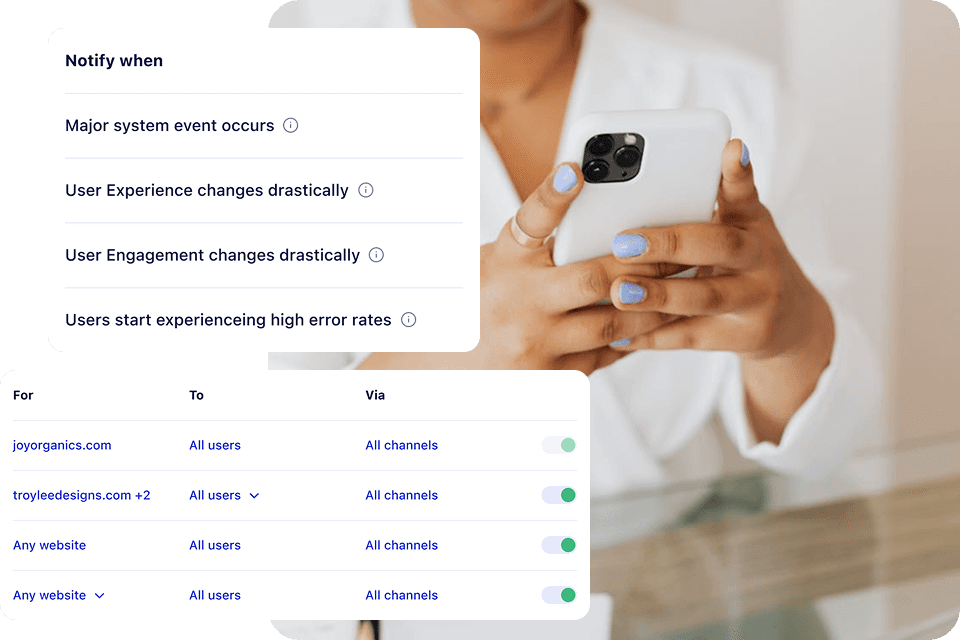
Uxi doesn't just analyze, it acts. Schedule alerts, run projections, track competitors, and work with Uxify tools.
Close to you
Chat with Uxi anywhere - on Slack, inside Uxify, or your favorite work apps. Insights follow you, not the other way around.
One prompt. Instant clarity.
Ask anything
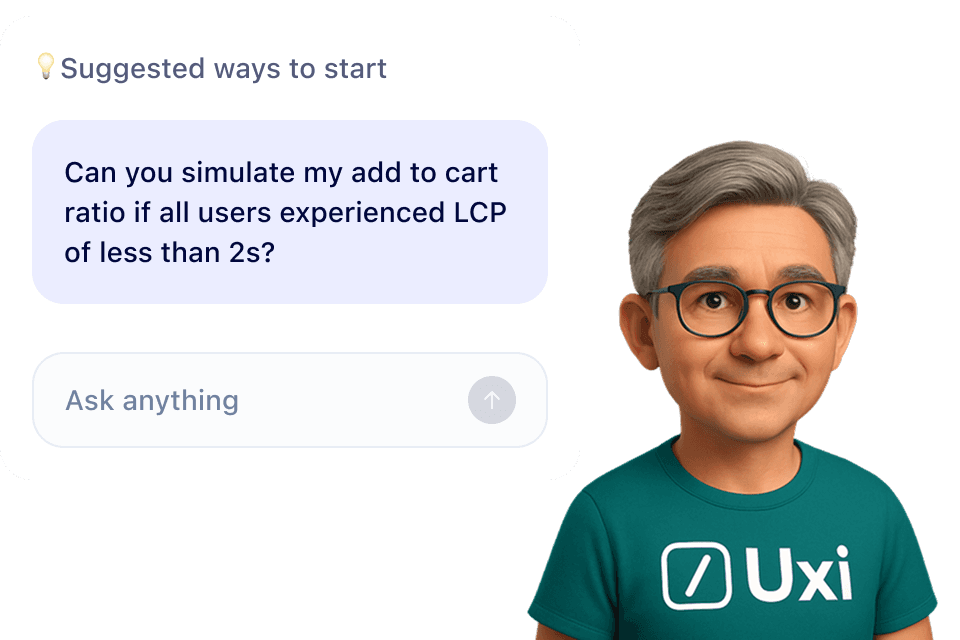
Watch how Uxi answers real questions about your site. From "Why is checkout slow?" to "Which campaign converts best?", get instant, data-backed replies with visuals and insights.
Predict and act
Uxi doesn't wait for reports, it predicts results before they happen. See how it flags slowdowns, alerts your team, and suggests proactive fixes.
Always within reach
Try Uxi inside the tools you already use. See it in Slack, the Uxify app, or your analytics dashboard - always ready with context-aware answers.








Here's what our customers say

I have first-hand experience that the Uxify product is in a class of its own. It's been instrumental in helping me pass and exceed my core web vitals, which has significantly impacted my organic traffic.

Steve Hutt
ex-Shopify | DTC Founder | Podcast Host

In summary, Navigation AI offers a smart, efficient, and user-friendly solution to website speed optimization, making it an invaluable asset for any online platform aiming to improve user engagement and retention.

Panos T.
CEO

I'm genuinely surprised more people in Tech SEO aren't talking about the Speculation Rules API yet. Companies like Uxify are already putting it to work, and the results we're seeing are insane. Here's a real example from one of our clients: LCP improved by 53% TTFB dropped from 0.7s to 0.2s +56% more pageviews All thanks to preloading and prerendering pages before the user even clicks. It's not another "PageSpeed tweak." It's a new way of thinking about performance.

Fabien Galet
Head of SEO & CRO at MindArc
Most common questions
What is Uxi?
Uxi is your personal AI performance engineer within Uxify. It analyzes your site’s real experience data and delivers tailored insights, optimizations, and recommendations — just like a human expert, but faster and always available.
How does Uxi generate its recommendations?
Uxi reviews your site’s Core Web Vitals, user behavior, and experience data in real time. Then it applies performance engineering best practices and AI reasoning to suggest improvements specific to your industry, layout, and audience.
What kind of insights can I get from Uxi?
Uxi provides a complete view of how people experience and interact with your site. Beyond Core Web Vitals like LCP, INP, and CLS, it also analyzes engagement signals such as early exits, time on page, and scroll behavior. You’ll get tailored suggestions that connect performance and engagement — helping you understand not just how fast your site feels, but how effectively it keeps users engaged.
How is Uxi different from traditional analytics tools?
Most analytics tools show what happened — Uxi explains why it happened and how to improve it. It combines your real-user data with contextual knowledge from thousands of sites, letting you act on insights instead of digging through dashboards.
Can Uxi adapt to my specific website or industry?
Yes. Uxi continuously learns from your site’s structure, traffic patterns, and industry benchmarks. That means its recommendations for an e-commerce store, a SaaS platform, or a publisher are never generic — they’re tuned to what actually matters for you.
Do I need technical knowledge to use Uxi?
Not at all. Uxi translates complex performance findings into clear, actionable language. Whether you’re a developer, marketer, or product manager, you’ll get precise, understandable steps to improve user experience and performance.
Stop digging through dashboards
Ask Uxi and get the answers, insights, and actions you need - in seconds.